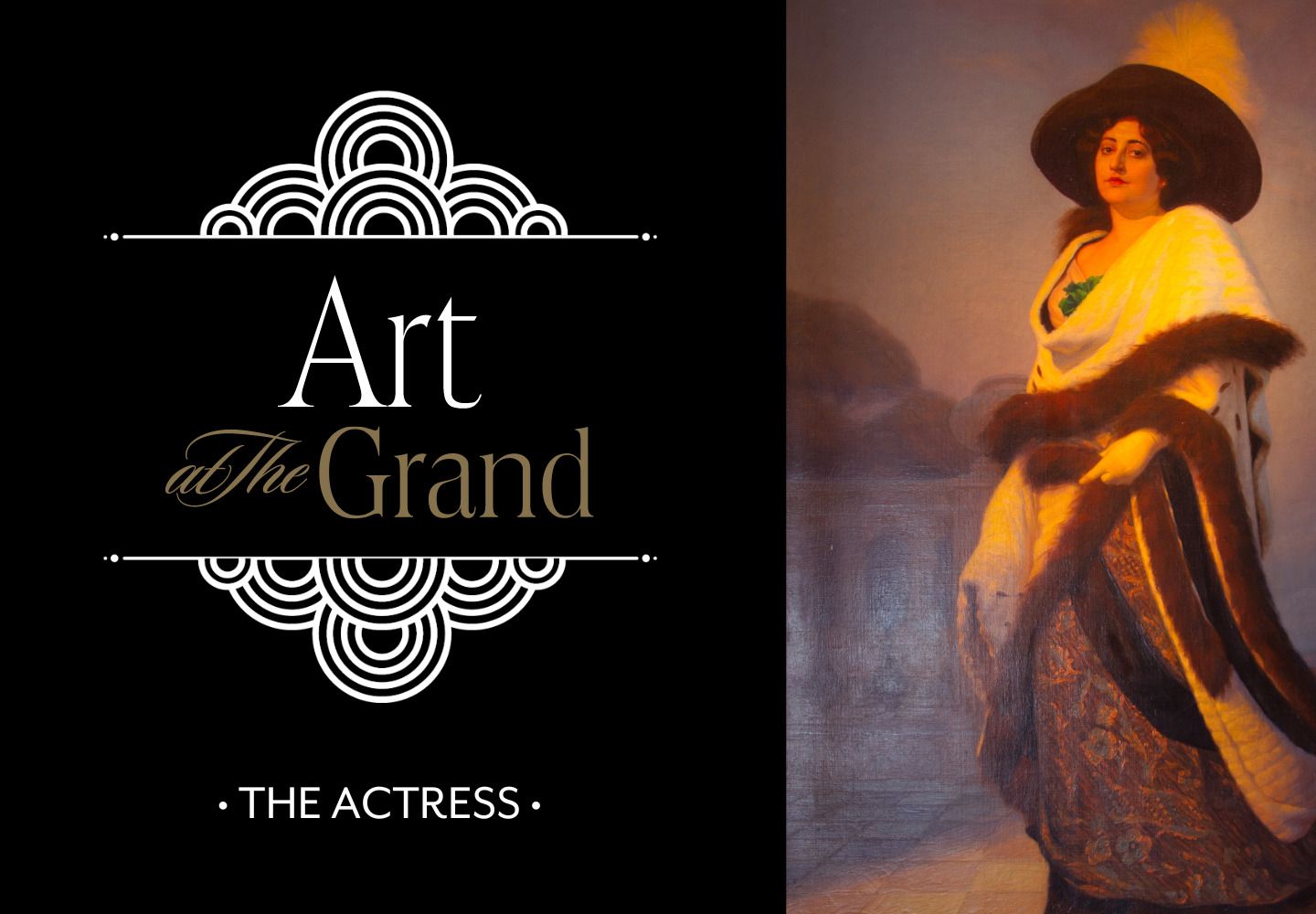
Art at The Grand: The Actress
Art at The Grand is a series dedicated to focusing on one of the many treasures featured in the self-paced Art Tour at The Grand America.
November 22, 2022
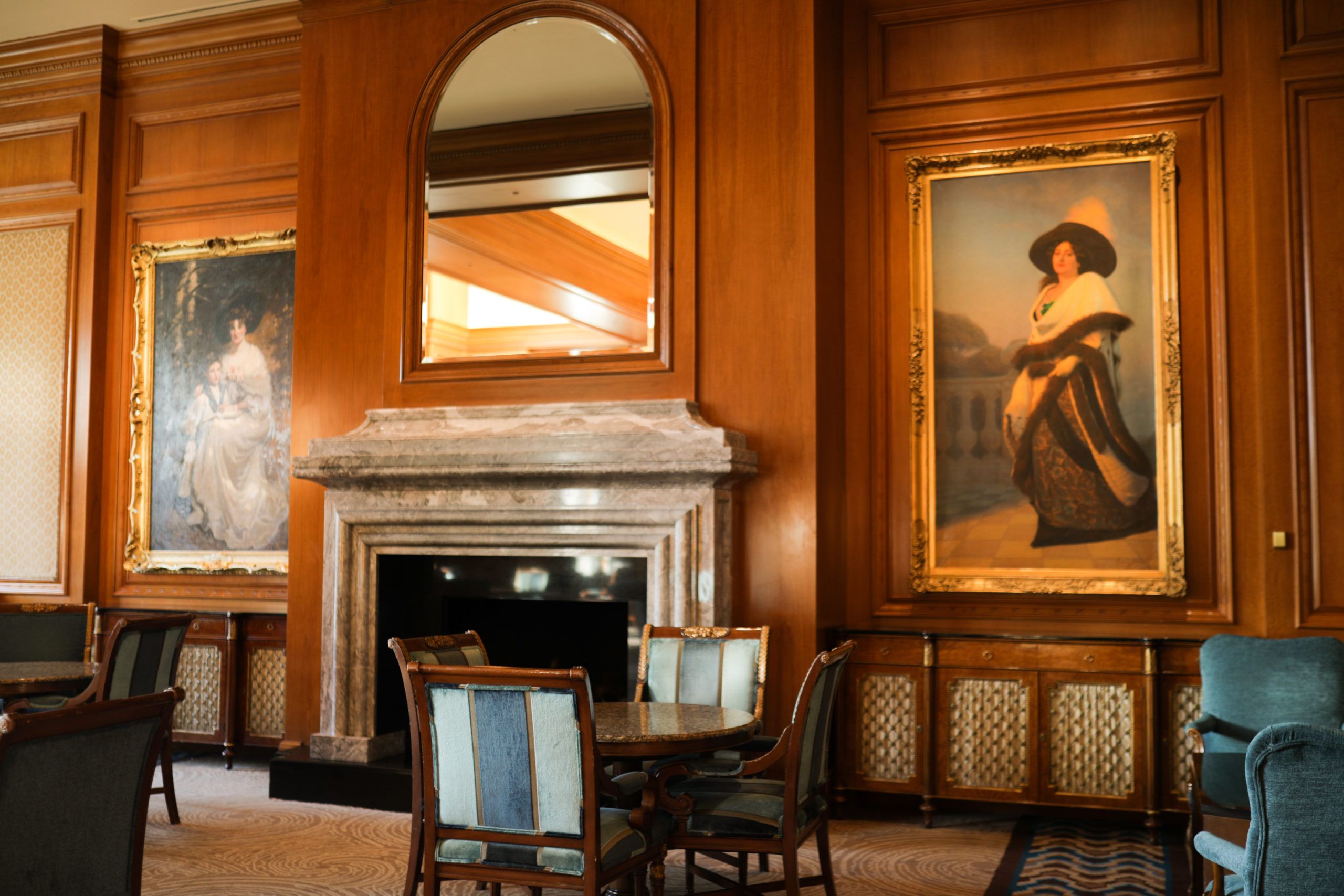
Art at The Grand is a series dedicated to focusing on one of the many treasures featured in the self-paced Art Tour at The Grand America. Today, we are taking a closer look at an early 20 th century portrait by French artist Henry Bouvet, titled “The Actress.”
Mid-stride, eye contact unbroken. Her long body further elongated by the way it is framed. From this angle, the viewer is placed literally beneath her. Draped in a fur-fringed cape, her still-exposed neck suggests a transition in the weather. The warm light of autumn all around her. This piece, titled The Actress , was exhibited in 1912 by Henry Bouvet. Very little is known about this actress. Her attributed name, Hélène Langeau de la Treille, unearths no concrete record. And yet, her gaze lingers. Her dominion in the frame is unmistakable.
Of course, we know that she crossed paths with Henry Bouvet. As an artist, Bouvet was a practitioner of more classical techniques. In 1878, he enrolled in the École des Beaux-Arts, the premier institution in France. Around this time, the École was experiencing a tumultuous period of resistance within the greater art world. Following the instructional practices outlined by the French Academy of Fine Arts, the École propagated strict, hierarchical views. By 1863, outcry against the Academy for rejecting the work of experimentalists including Edouard Manet, Paul Cézanne, and Camille Pissarro from being exhibited in their Salon caused Emperor Napoleon III to intervene. He announced a simultaneous exhibition, called Salon des Refuses (“an exhibition of rejects”), for the artists the Academy refused to support. By the time Bouvet entered the Academy, their views and their Salon were steadfastly in favor of conservative methods. In 1912, Bouvet was invited to exhibit The Actress at the very Salon that had been turning away the work of artists on the cutting edge for decades.
Hélène’s own art form was not immune to the new century’s innovations in craft. Of the little we know of Hélène’s career, we know she was connected with acclaimed playwright, Sacha Guitry. Only three years after the exhibition of The Actress , Guitry made his first foray into film, a strong statement on the rapid cultural movement towards the medium. While there is no record to confirm whether or not Hélène left the theater to pursue screen work, she must have felt immense pressure to do so. Hélène, as all actresses, was at the mercy of public taste and demand. She made her living by being “à la mode”—in the fashion of the day.
Placing Hélène in the Paris of her day, it is easy to imagine her walking along the Rue Cambon, passing Coco Chanel’s first millinery shop, which opened in 1910. Passing and, perhaps, not venturing inside. In Bouvet’s portrait, we see Hélène clothed in a distinctly Edwardian style. A style made unfashionable by Chanel and her revolutionary ideas about simplicity in women’s fashion. By contrast, the enormous feather we see in Hélène’s hat in The Actress would have provoked Chanel’s signature ire.
Whatever the specifics of her life, Hélène was a person living at the cross-section of unprecedented change. Only two years after her portrait’s exhibition, World War I will eclipse public imagination and changes in manufacturing technology will transform the global marketplace. Surely Bouvet felt the enormity of these oncoming changes. Through his lens, we see Hélène, and the transitory time she represents, in a way we might not had she been captured by Picasso, or another of Bouvet’s less-“representational” contemporaries.
Bouvet was known for the attention he paid to light; he understood the power that changes in light have on objects in space. Here, he shows us Hélène at sun down. The light is waning but her expression is made fierce, aglow from the light that is dying. We sense her defiance in the face of a definitive end.
With unique pieces displayed throughout the property, The Grand America is one of the best ways to experience unfettered access to fine art in Salt Lake City.
The Actress can be viewed on the south wall in the Lobby Lounge, and is one of several pieces by Henry Bouvet on display at The Grand America hotel. Guests and locals can access a free, self-guided walking art tour, featuring paintings, sculptures, tapestries, and other fine objects here .